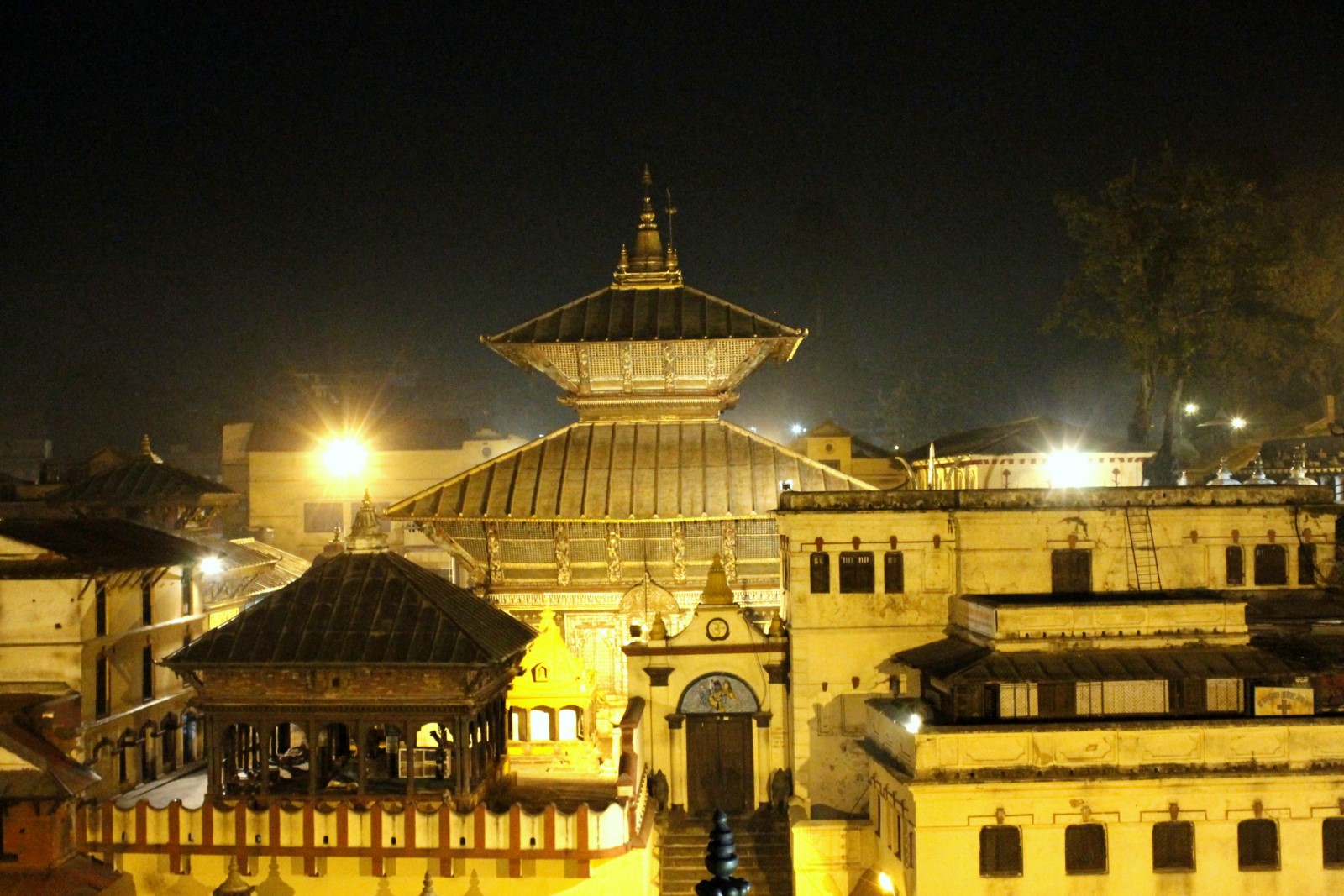
The Pashupatinath Temple is one of the most revered Hindu temples dedicated to Lord Shiva, located on the banks of the Bagmati River in Kathmandu, Nepal. It is a UNESCO World Heritage Site, recognized for its spiritual significance and architectural grandeur. The temple complex spans 246 hectares and includes 518 smaller temples and shrines. Pashupatinath is not only a place of worship but also a center for cultural and spiritual activities, attracting thousands of pilgrims and tourists annually.
Origin of the Name
The name Pashupatinath translates to “Lord of Animals” from Sanskrit, where “Pashu” means animals and “Pati” means protector. This name signifies Shiva’s role as the guardian of all living beings, not just humans. The temple is dedicated to Shiva in his form as Pashupati, emphasizing his connection with the animal kingdom and his role as the protector of all creatures. According to legend, Shiva took the form of a deer and roamed the forests of Kathmandu, leading to the establishment of the temple at this site.
History of the Temple
The history of Pashupatinath Temple dates back to at least the 5th century CE, though the exact origins are unclear. The temple is considered pre-Vedic in its origin and gained prominence as Pashupati in the Skanda Purana. The current structure was built in the 15th century after the original wooden buildings were replaced due to termite damage. The temple has been a significant site for Hindu worship and rituals for centuries, attracting pilgrims from Nepal and India. The temple complex includes numerous smaller temples, ashrams, and inscriptions raised over the centuries along the banks of the sacred Bagmati River.
Statue/Photo/Symbol in the Temple
Inside the main temple, there is a four-faced Shiva Lingam, representing Shiva’s avatars. Each face of the Lingam symbolizes different aspects of Shiva: Tatpurusha (East), Aghor (South), Vamadeva (West), and Sadyojata (North), with the fifth face, Ishan, being invisible. The Lingam is adorned with a silver serpent and is considered highly sacred by devotees. The temple also features intricate wood carvings, silver-coated doors, and a pagoda-style architecture that is unique to the region.
References in Scriptures
The temple is described as one of the most sacred Shiva Kshetras (abodes of Shiva) and is spiritually connected to other significant Shiva temples like Kedarnath and Kashi Vishwanath. The Lingam at Pashupatinath is believed to fulfill all desires and is worshipped as the head of Shiva. The temple’s significance is also highlighted in the Mahabharata, where it is mentioned as a place of great spiritual power.
Certainly! The Pashupatinath Temple holds a significant place in Hindu scriptures, with mentions in various ancient texts that highlight its spiritual importance.
Skanda Purana
The Skanda Purana is one of the largest Mahapuranas, and it contains extensive references to Pashupatinath Temple. It describes the temple as one of the most sacred abodes of Lord Shiva, known as Pashupati. The text emphasizes the temple’s divine power and its ability to fulfill the desires of devotees who worship the Shiva Lingam here.
Shiva Purana
In the Shiva Purana, Pashupatinath Temple is mentioned as a major pilgrimage site for followers of Shiva. The Purana narrates the story of Shiva taking the form of a deer and roaming the forests of Kathmandu, which led to the establishment of the temple at this location. The Shiva Lingam at Pashupatinath is described as a powerful symbol of Shiva’s presence and blessings.
Mahabharata
The Mahabharata, one of the two major Sanskrit epics of ancient India, also references Pashupatinath Temple. It mentions the temple as a place of great spiritual power and significance, where devotees can attain moksha (liberation) through sincere worship. The epic highlights the temple’s role in the spiritual journey of its visitors.
Gopalaraj Vamsavali
The Gopalaraj Vamsavali is the earliest known chronology of Nepal, and it provides historical accounts of the temple’s establishment. According to this text, the temple was founded by King Supuspadeva of the Lichhavi dynasty in the first century CE. The Vamsavali also details the temple’s renovations and reconstructions over the centuries, including the efforts of King Shivadeva and Ananta Malla.
Other References
The temple is also mentioned in various other scriptures and inscriptions, dating back to as early as the 5th century CE. These texts collectively underscore the temple’s importance as a center for spiritual and religious activities, attracting pilgrims from across the region.
The references in these scriptures highlight the Pashupatinath Temple’s enduring significance in Hinduism and its role as a sacred site for worship and pilgrimage.
If you have any more questions or need further details, feel free to ask via Contact Us Page. Thank you kindly!
Other Temples in the Pashupati Area
The Pashupatinath Temple complex in Kathmandu, Nepal, is not only home to the main temple dedicated to Lord Shiva but also includes numerous other significant temples and shrines. Here are some notable ones:
Guhyeshwari Temple
Located near the main Pashupatinath Temple, Guhyeshwari Temple is one of the famous Shakti Peeths in Nepal[1]. Dedicated to Goddess Sati, it is believed to be the site where her anal portion fell during Shiva’s grief-stricken wanderings after her death. The temple features a silver-plated waterhole covered by a silver kalash (auspicious water jar) and is a significant site for tantric rituals.
Boudhanath Stupa
While primarily a Buddhist site, the Boudhanath Stupa is located close to the Pashupatinath Temple and is one of the largest stupas in Nepal. It is a UNESCO World Heritage Site and serves as a center for Tibetan Buddhism. The stupa is surrounded by monasteries and shops, making it a vibrant area for both spiritual and cultural activities.
Kirateshwar Mahadev Temple
Situated within the Pashupatinath complex, Kirateshwar Mahadev Temple is dedicated to Lord Shiva in his Kirat form. This temple is particularly popular among devotees during the full moon days when special musical performances and prayers are held. The temple’s serene environment and its location by the Bagmati River make it a peaceful spot for meditation and worship.
Bhairav Temple
The Bhairav Temple within the Pashupatinath area is dedicated to Bhairav, a fierce manifestation of Shiva[3]. This temple is known for its intense rituals and is frequented by devotees seeking protection and strength. The deity here is often depicted with a terrifying appearance, symbolizing the destructive aspect of Shiva[3].
Vishwarupa Temple
Vishwarupa Temple is another important shrine in the Pashupatinath complex. It is dedicated to Lord Vishnu and features intricate carvings and statues. The temple is a testament to the syncretic nature of Hindu worship, where multiple deities are revered within the same sacred space.
Ram Mandir
Ram Mandir, dedicated to Lord Rama, is located within the Pashupatinath area. This temple is particularly crowded during Ram Navami, the birthday of Lord Rama. Devotees gather here to offer prayers and participate in various religious activities.
Hanuman Shrine
Near the main temple, there is a small shrine dedicated to Hanuman, the monkey god and devotee of Lord Rama. This shrine is often visited by devotees seeking blessings for strength and protection. Hanuman is revered for his unwavering devotion and courage.
These temples and shrines collectively contribute to the rich spiritual tapestry of the Pashupatinath area, making it a significant pilgrimage site for Hindus and a fascinating destination for visitors interested in Nepal’s religious heritage.
If you have any more questions or need further details, feel free to ask!
How to Get There
The temple is located about 3 kilometers northwest of Kathmandu’s city center. Visitors can reach the temple by taxi, bus, or even walking from nearby areas like Thamel Street or Boudhanath Stupa. The temple is easily accessible from Tribhuvan International Airport, which is just a short drive away. Public transportation options are plentiful, and the temple is well-connected to major roads and highways.
Best Time to Visit
The best time to visit Pashupatinath Temple is during the dry seasons from September to November and February to April. These months offer clear skies, mild temperatures, and minimal rain, making it comfortable for exploring the temple complex. Additionally, visiting during Maha Shivaratri in February or March provides a unique opportunity to witness vibrant celebrations and rituals dedicated to Lord Shiva. The temple is also bustling with activity during other major Hindu festivals like Teej and Dashain.
No responses yet